NotPetya: The Cyberattack That Paralyzed Global Logistics
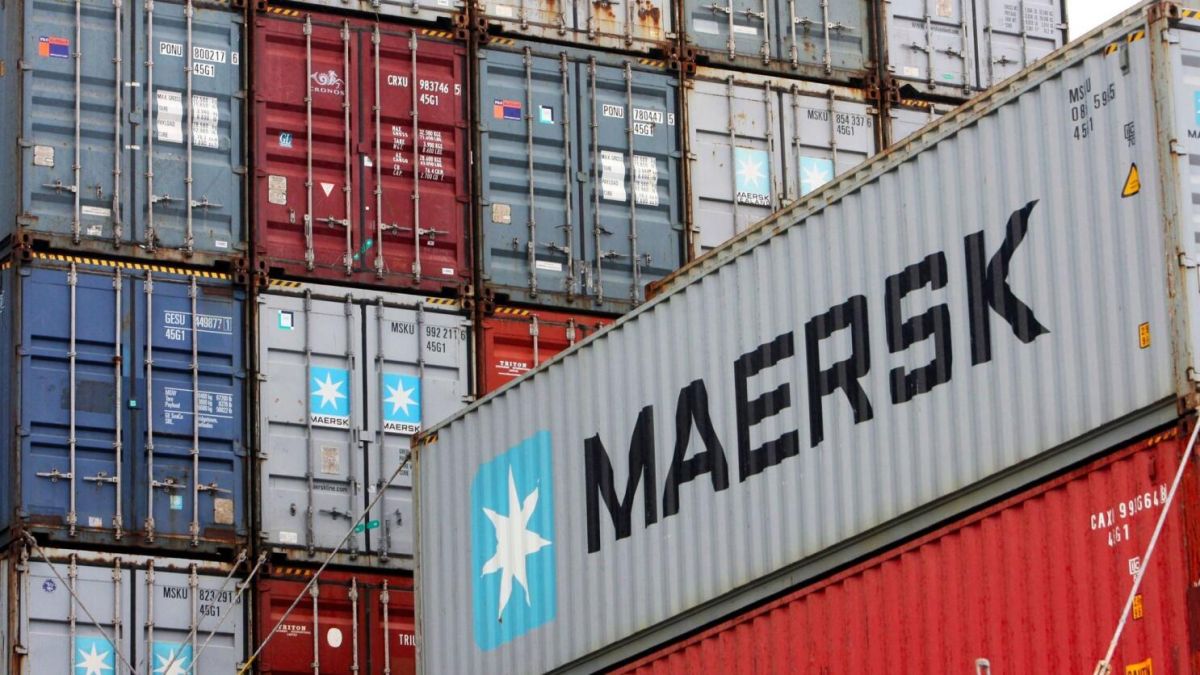
...Maersk’s terminals worldwide were forced offline within hours of the NotPetya outbreak in 2017 (Wikimedia / CC)....
In late June 2017, a Ukrainian accounting software update seeded one of the most destructive pieces of code ever unleashed on corporate networks. The malware, later dubbed NotPetya, initially masqueraded as ransomware but was in fact a wiper—a tool built to erase, not to extort. Within hours it spread from its Ukrainian epicenter to multinational enterprises, crippling shipping giant A.P. Møller-Maersk, pharmaceutical producer Merck, and countless others.
The result was a cascading operational failure that disrupted global trade, froze ports across Europe, and inflicted an estimated $10 billion in damages worldwide.
Technical Anatomy of the Attack
The initial infection vector was a supply-chain compromise of M.E.Doc, a widely used Ukrainian tax-reporting application. Attackers—later attributed to a Russian state-sponsored group—inserted a malicious payload into legitimate software updates signed with the vendor’s key.
When victims installed the update, the malware executed a sophisticated sequence:
Privilege escalation via EternalBlue and EternalRomance exploits (targeting SMB v1 vulnerabilities on Windows).
Credential harvesting through LSASS memory scraping to obtain NTLM hashes and Kerberos tickets.
Rapid lateral movement using PsExec and WMIC to propagate within flat corporate networks.
Destructive phase, where the malware overwrote the Master Boot Record (MBR), rendering devices unbootable and data unrecoverable.
Crucially, NotPetya contained no mechanism to decrypt data even if ransom was paid. The ransom note was camouflage; the true objective was sabotage.
Maersk: From Infection to Global Shutdown
Maersk’s Ukrainian offices were among the first affected. Because Maersk’s internal Active Directory replicated globally, the malware spread through domain synchronization within minutes. As replication reached headquarters and data centers in the UK, Denmark, and the Netherlands, the company’s core infrastructure failed.
Within hours, 49,000 laptops and 4,000 servers were wiped. Booking systems, terminal operations, and customs interfaces all went dark. Ships continued sailing but could not dock or unload because port systems could no longer identify containers. Employees resorted to whiteboards to track cargo movements—a powerful image of digital collapse in a hyperconnected world.
The outage lasted nearly two weeks. Maersk estimated direct losses of around $300 million, though analysts believe the total global trade impact exceeded several billion.
Why NotPetya Was Different
Unlike financially motivated ransomware, NotPetya’s code contained logic designed to ensure destruction: once it gained administrative privileges, it replaced the boot loader and rebooted the system, making recovery impossible. It also propagated autonomously, without external command-and-control.
This combination—automated propagation, system-level destruction, and a fake ransom interface—transformed NotPetya from cybercrime into cyber warfare.
For defenders, it shattered long-held assumptions: perimeter firewalls, antivirus signatures, and backups stored on connected systems were all rendered useless. Organizations learned that supply-chain trust—the implicit belief that signed software is safe—can be weaponized against them.
Forensic and Incident Response Insights
Post-incident analysis revealed that many enterprises lacked network segmentation between administrative and production environments. Maersk’s Active Directory replication was bidirectional and unfiltered, allowing the infection to cross borders seamlessly.
After the attack, the company rebuilt its global IT infrastructure from a single surviving domain controller image located in Ghana—a case study in the value of offline backups.
Key forensic indicators observed included unauthorized SMB traffic spikes, execution of PsExec from non-administrative hosts, and the creation of scheduled tasks named “dllhost.dat”. The timeline analysis confirmed that the destructive payload triggered approximately one hour after initial infection—too little time for manual containment without automated response mechanisms.
Defensive Architecture and Resilience Lessons
Zero-Trust Network Segmentation: Active Directory replication and SMB communication should be strictly limited. Replication topology must enforce directional flow and authentication boundaries between regions.
Immutable Offline Backups: Snapshots disconnected from the production network are the only guarantee of recovery from wiper attacks. Cloud backups that share authentication credentials with the main domain offer no protection.
Application Supply-Chain Validation: Every software update, even when digitally signed, should undergo sandbox execution and behavioral analysis before deployment in production.
Endpoint Detection and Response (EDR): Behavioral analytics detecting mass file encryption, credential harvesting, or MBR modification can trigger containment faster than signature-based antivirus.
Crisis Governance: Cross-functional response teams (IT, legal, communications, logistics) must train for full-system rebuild scenarios. Table-top exercises should simulate identity infrastructure loss.
European Policy and Industry Implications
The collateral impact of NotPetya convinced European regulators that critical infrastructure must include logistics and shipping. It accelerated development of the EU Cybersecurity Act and later the NIS 2 Directive, expanding mandatory protection and reporting requirements.
For private industry, the lesson was that digital interdependence among suppliers, insurers, and governments creates shared exposure. A vulnerability in one vendor’s software can disrupt entire economic sectors—precisely what happened when a Ukrainian tax application paralyzed global shipping.
Conclusion — From Stuxnet to NotPetya and Beyond
NotPetya demonstrated that modern malware can function as a geopolitical weapon disguised as ransomware. Its indiscriminate damage across civilian industries blurred the boundary between espionage and warfare.
For European enterprises, it redefined cybersecurity from a technical safeguard to a matter of national resilience. The Maersk experience showed that survival depends not on perfect prevention but on architectural foresight—isolated backups, disciplined identity design, and tested recovery plans.
The next Stuxnet-scale incident will likely exploit different software and different supply chains, but the principle remains constant: in a hyperconnected world, trust itself is the most dangerous vulnerability.
The result was a cascading operational failure that disrupted global trade, froze ports across Europe, and inflicted an estimated $10 billion in damages worldwide.
Lateral propagation exploited trusted networks and shared credentials across continents.
Technical Anatomy of the Attack
The initial infection vector was a supply-chain compromise of M.E.Doc, a widely used Ukrainian tax-reporting application. Attackers—later attributed to a Russian state-sponsored group—inserted a malicious payload into legitimate software updates signed with the vendor’s key.
When victims installed the update, the malware executed a sophisticated sequence:
Privilege escalation via EternalBlue and EternalRomance exploits (targeting SMB v1 vulnerabilities on Windows).
Credential harvesting through LSASS memory scraping to obtain NTLM hashes and Kerberos tickets.
Rapid lateral movement using PsExec and WMIC to propagate within flat corporate networks.
Destructive phase, where the malware overwrote the Master Boot Record (MBR), rendering devices unbootable and data unrecoverable.
Crucially, NotPetya contained no mechanism to decrypt data even if ransom was paid. The ransom note was camouflage; the true objective was sabotage.
Maersk: From Infection to Global Shutdown
Maersk’s Ukrainian offices were among the first affected. Because Maersk’s internal Active Directory replicated globally, the malware spread through domain synchronization within minutes. As replication reached headquarters and data centers in the UK, Denmark, and the Netherlands, the company’s core infrastructure failed.
Within hours, 49,000 laptops and 4,000 servers were wiped. Booking systems, terminal operations, and customs interfaces all went dark. Ships continued sailing but could not dock or unload because port systems could no longer identify containers. Employees resorted to whiteboards to track cargo movements—a powerful image of digital collapse in a hyperconnected world.
The outage lasted nearly two weeks. Maersk estimated direct losses of around $300 million, though analysts believe the total global trade impact exceeded several billion.
Digital port systems were disabled, forcing manual cargo coordination.
Why NotPetya Was Different
Unlike financially motivated ransomware, NotPetya’s code contained logic designed to ensure destruction: once it gained administrative privileges, it replaced the boot loader and rebooted the system, making recovery impossible. It also propagated autonomously, without external command-and-control.
This combination—automated propagation, system-level destruction, and a fake ransom interface—transformed NotPetya from cybercrime into cyber warfare.
For defenders, it shattered long-held assumptions: perimeter firewalls, antivirus signatures, and backups stored on connected systems were all rendered useless. Organizations learned that supply-chain trust—the implicit belief that signed software is safe—can be weaponized against them.
Forensic and Incident Response Insights
Post-incident analysis revealed that many enterprises lacked network segmentation between administrative and production environments. Maersk’s Active Directory replication was bidirectional and unfiltered, allowing the infection to cross borders seamlessly.
After the attack, the company rebuilt its global IT infrastructure from a single surviving domain controller image located in Ghana—a case study in the value of offline backups.
Key forensic indicators observed included unauthorized SMB traffic spikes, execution of PsExec from non-administrative hosts, and the creation of scheduled tasks named “dllhost.dat”. The timeline analysis confirmed that the destructive payload triggered approximately one hour after initial infection—too little time for manual containment without automated response mechanisms.
Maersk’s IT teams reconstructed identity services from one surviving offline backup.
Defensive Architecture and Resilience Lessons
Zero-Trust Network Segmentation: Active Directory replication and SMB communication should be strictly limited. Replication topology must enforce directional flow and authentication boundaries between regions.
Immutable Offline Backups: Snapshots disconnected from the production network are the only guarantee of recovery from wiper attacks. Cloud backups that share authentication credentials with the main domain offer no protection.
Application Supply-Chain Validation: Every software update, even when digitally signed, should undergo sandbox execution and behavioral analysis before deployment in production.
Endpoint Detection and Response (EDR): Behavioral analytics detecting mass file encryption, credential harvesting, or MBR modification can trigger containment faster than signature-based antivirus.
Crisis Governance: Cross-functional response teams (IT, legal, communications, logistics) must train for full-system rebuild scenarios. Table-top exercises should simulate identity infrastructure loss.
European Policy and Industry Implications
The collateral impact of NotPetya convinced European regulators that critical infrastructure must include logistics and shipping. It accelerated development of the EU Cybersecurity Act and later the NIS 2 Directive, expanding mandatory protection and reporting requirements.
For private industry, the lesson was that digital interdependence among suppliers, insurers, and governments creates shared exposure. A vulnerability in one vendor’s software can disrupt entire economic sectors—precisely what happened when a Ukrainian tax application paralyzed global shipping.
Conclusion — From Stuxnet to NotPetya and Beyond
NotPetya demonstrated that modern malware can function as a geopolitical weapon disguised as ransomware. Its indiscriminate damage across civilian industries blurred the boundary between espionage and warfare.
For European enterprises, it redefined cybersecurity from a technical safeguard to a matter of national resilience. The Maersk experience showed that survival depends not on perfect prevention but on architectural foresight—isolated backups, disciplined identity design, and tested recovery plans.
The next Stuxnet-scale incident will likely exploit different software and different supply chains, but the principle remains constant: in a hyperconnected world, trust itself is the most dangerous vulnerability.